
Pasco Has Hundreds of Plate Readers. Only About 70 Belong to the Sheriff's Office.
Between the Sheriff's Office, private businesses, HOAs, toll gantries and car washes, something close to 470 devices read license plates in Pasco County. Roughly 70 are law enforcement, and those are the only ones with an audit log and a deletion date.
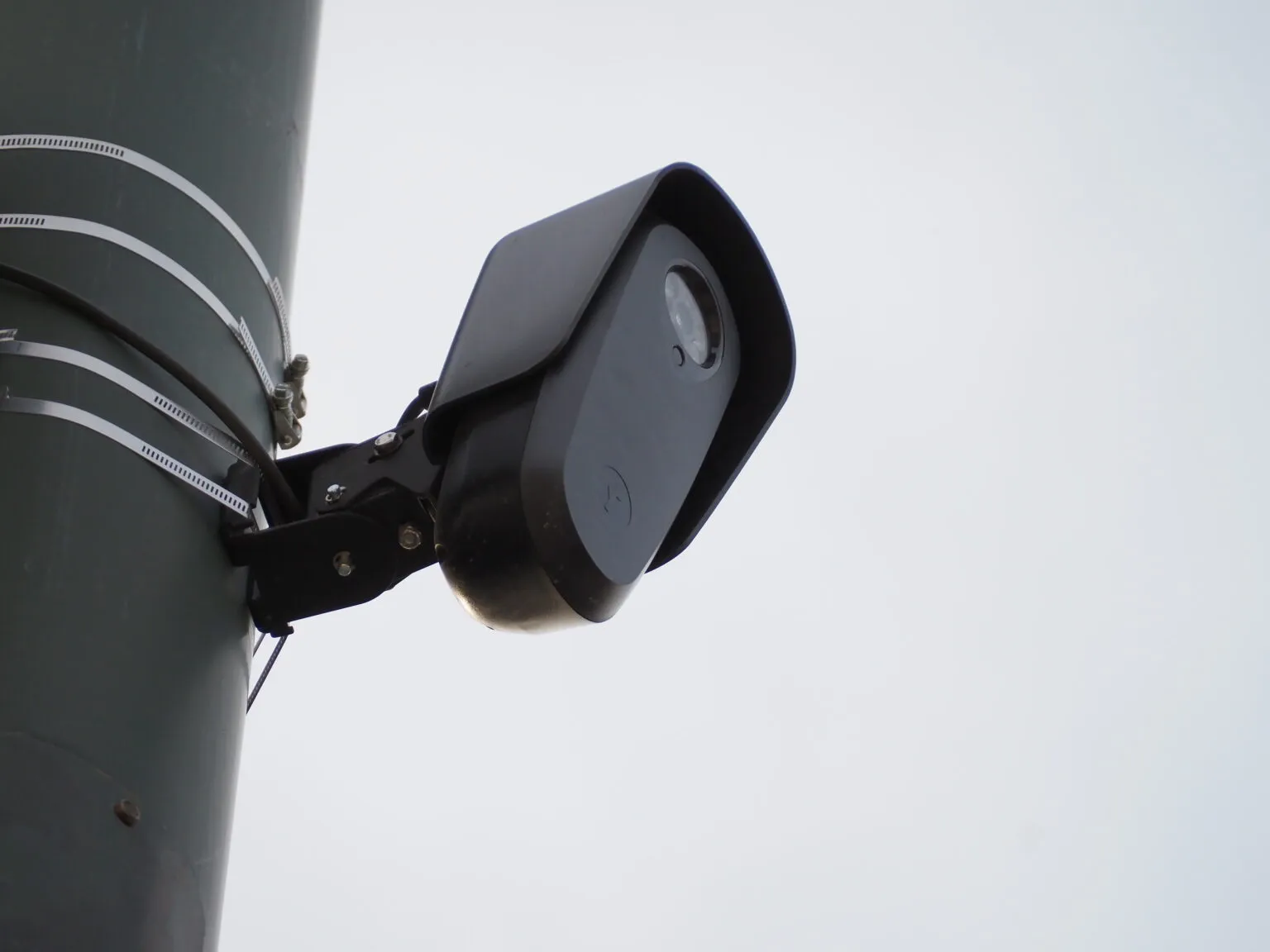
Drive State Road 54 between New Port Richey and Wesley Chapel and you pass them without noticing: slim black boxes on poles, pointed at the travel lanes. They photograph the back of your car, read the plate, and write down the time and place. Then, in Pasco County, they forget it in 30 days.
Automated license plate readers have become one of the most argued-about pieces of equipment in local policing, and the argument arrived in Pasco this summer. It is worth separating what the technology does from what people fear it does, because the two have drifted a long way apart.
- Sheriff's Office cameras: roughly 70 across Pasco County
- Other plate readers in the county: roughly 100 run by businesses, HOAs and CDDs, plus an estimated 300 more tied to tolling, car washes, parking and access control
- Share that belongs to law enforcement: under one in six
- How long the Sheriff's Office keeps data: 30 days, then deleted
- Who can search it: personnel with a case number or documented law enforcement purpose, with every search logged and audited
- What the county actually votes on: permits to place equipment in the public right of way, not the program itself
What the cameras are, and what they are not
An automated license plate reader is a camera with optical character recognition bolted on. It photographs a passing vehicle, converts the plate into text, and stores that string alongside a timestamp, a location and usually an image of the vehicle's rear. That is the whole product.
It is worth being precise about what is not in that record. There is no facial image of the driver. There is no name, no address and no registration lookup attached to the read itself. The camera does not know who owns the car, and it does not care. It produces a line of data that says a plate reading a certain sequence passed a certain pole at a certain minute.
Nor do these cameras write tickets. They are not red light cameras and they are not speed cameras. They do not measure speed at all. A separate program run by New Port Richey police is moving to a vendor called RedSpeed for red light and school zone enforcement, and those devices do read plates, but they are a different system doing a different job. Conflating the two is the most common error in the public conversation about this technology, and it matters, because one of them can cost you money in the mail and the other cannot.
The number is bigger than the Sheriff's Office
The figure that surprises people is not the agency's own count. The Sheriff's Office runs roughly 70 cameras. There are roughly 100 more scattered across Pasco County that the agency does not own, operate or control, mounted by private businesses, homeowners associations and community development districts at the entrances to their own neighborhoods and parking lots.
That brings the policing-and-property total to something close to 170 devices, and as the next section explains, even that undercounts the plate reading a Pasco driver passes through. It also means that most of the plate-reading infrastructure in Pasco County was installed by private parties who wanted it, on property they own, for reasons of their own. A gated community that puts a camera at its only entrance is not executing a government surveillance strategy. It is doing what it has always done with a guard shack and a clipboard, faster.
This distinction gets lost, and it cuts in an uncomfortable direction for both sides of the debate. Critics who describe a government dragnet are describing a minority of the cameras. Supporters who point to the Sheriff's Office audit policy are describing controls that do not reach the other hundred.
The plate readers nobody argues about
Widen the frame beyond policing and the picture changes considerably. A review of the other systems operating in Pasco County turns up an estimated 300 additional devices that read license plates and have nothing to do with law enforcement at all.
Start with the toll road. The Suncoast Parkway runs the length of the county, and its gantries are all-electronic. If you drive it without a transponder, a camera photographs your plate, the system matches that plate to the registered owner, and a bill arrives at your house. That is a plate reader performing a lookup the Sheriff's cameras do not perform. The deputy's system records that a plate passed a pole. The toll system records that a plate passed a gantry and then finds out your name and where you live.
Then there is the transponder itself. A SunPass is a location beacon that hundreds of thousands of Floridians paid for, mounted on their own windshields, and think about roughly never. It reports position by design, continuously, for the convenience of not stopping at a booth.
Add the commercial installations. Car washes read plates to recognize subscription members at the gate. Parking operators read them to time a stay and calculate a charge. Apartment complexes, storage facilities and gated neighborhoods read them at the entrance. Retailers read them in lots. None of this required a public hearing, because none of it involves government property.
The comparison is uncomfortable in a direction the debate usually misses. Those systems carry no case-number requirement, no audit log, no defined retention period, and no rule about who else gets the data. A commercial operator can generally keep plate records as long as it likes and share or sell them under the terms of a privacy policy almost nobody reads. Measured against that, the most tightly governed plate reader in Pasco County is the one owned by the Sheriff's Office, because it is the only one with a documented purpose requirement, an audit trail and an expiration date attached.
What Pasco says it uses them for
Undersheriff Chase Daniels, who oversees the agency's legislative and policy work, has been the public face of the program. His account of the controls is specific and, unusually for this debate, testable.
Searches are not open-ended. As Daniels described the policy to Tampa Bay 28, "any member of the Sheriff's Office that accesses the Flock database has to have a call number, a case number, or some type of law enforcement purpose that they have to document, and then that information is all audited." The stated uses are missing persons, felonies and active criminal investigations. Not traffic infractions. Not curiosity. Not a deputy running the plate of a car he did not like the look of.
Data is held 30 days and then deleted, and that retention rule follows the data when other agencies ask for it. "If we set our policy at 30 days and another local sheriff's office needs to access that, they have to follow our policies," Daniels said.
On the underlying privacy objection, his position is that the camera sees what a person could see. The cameras sit in public places and capture information "that any member of the public standing on the side of the road could get." He has also said plainly that the concerns are legitimate: "We do understand the privacy concerns and we are certainly cognizant of that and we've adopted policies that protect that."
The Sheriff's Office has told commissioners the system is producing results at a rapid clip, crediting plate reads with helping close hundreds of cases. That claim deserves the same scrutiny as any other, and the public would be better served by a periodic published tally than by a figure cited from a podium. But the underlying mechanism is not mysterious. A stolen car, a fleeing suspect vehicle, an Amber or Silver Alert and a hit-and-run all share one feature: the thing investigators most want is a plate and a direction of travel.
The county vote was not what people thought it was
Here is the part that generated the most confusion. The Board of County Commissioners does not approve or reject the Sheriff's Office surveillance program. It cannot. The Sheriff is a separately elected constitutional officer in Florida, and his operational decisions are not the commission's to make. Sheriff Chris Nocco decided to deploy plate readers. No commission vote put that decision in front of the board, and no commission vote can undo it.
What the commission handles is narrower and more mundane: permission to place equipment in the county right of way. It is a permitting question about poles and roadsides, the same category of decision as any other encroachment on public land. A commissioner voting yes is voting to let a pole be installed.
That has not stopped the permit from being treated as the real vote. Commissioners including Jack Mariano, who chairs the board, have pressed the right-of-way approval as the point of leverage over a program they otherwise have no authority over. The logic is straightforward: if the county owns the roadside, the county can decline to let cameras go on it.
The objection to that is worth stating fairly, because it is not nothing. The right of way genuinely does belong to the county, permits genuinely are the board's to grant, and an elected body that has concerns about a program is not obliged to hand over public land to expand it. If the commission is the only body in the county with any lever at all, it is not unreasonable that someone reaches for it.
The problem is that the lever does not work, and using it costs something. A permit denial does not end the program. The Sheriff can site cameras on private property with the owner's consent, which is exactly how the other hundred cameras in the county got there. What a denial actually changes is placement: it pushes cameras off the arterial roads chosen for traffic volume and onto whatever private frontage happens to be available and willing. That is not less surveillance. It is the same number of cameras in worse positions, chosen by property owners rather than by anyone accountable to voters.
It also relocates the conversation to a room that cannot resolve it. Residents who come to a commission meeting to argue about retention periods, audit practices and data sharing are, procedurally, in the wrong place. That is not a criticism of them. It is a criticism of how the process is explained. Those questions belong to the Sheriff's Office and the Legislature, and a permit hearing is a poor substitute for either.
Why the Fourth Amendment does not bar a camera at an intersection
The constitutional objection is the serious one, and it deserves a real answer rather than a dismissal.
The Fourth Amendment protects against unreasonable searches. Whether something counts as a search at all turns on whether a person has a reasonable expectation of privacy in it. Courts have held for decades that what you knowingly expose to the public is not protected. Your license plate is the strongest possible example. It is issued by the state, it is required by law to be displayed on the outside of your vehicle, and its entire function is to be read by strangers. A plate is the one thing about your car that exists specifically to be seen.
Courts have also consistently held there is no reasonable expectation of privacy in the exterior of a car on a public road. A deputy who writes down a plate at an intersection has not searched anything. Neither has a camera that does the same thing faster and without getting bored.
That is the settled part. Now the unsettled part, because an honest account has to include it.
The real constitutional question is not the single read. It is aggregation. The Supreme Court has signaled that enough individually public data points, collected long enough and assembled together, can amount to a search even though no single point would. That is the logic the Court used for cell phone location records. Applied to plate readers, the theory is that a dense enough network held long enough stops being a series of observations and becomes a map of where you go, who you visit and what you do.
This is not hypothetical. In Schmidt v. City of Norfolk, two Virginia residents represented by the Institute for Justice made exactly that argument against a network of 176 cameras, a system almost identical in size to Pasco's county-wide total. A federal judge rejected it, holding in a 51-page opinion that the network did not capture enough of anyone's movements to reconstruct the whole of their travel, and granted summary judgment to the city. The ruling is on appeal to the Fourth Circuit.
So the current legal answer is that a network of this scale, with reads at fixed points rather than continuous tracking, does not violate the Fourth Amendment. That answer could change on appeal. It is also worth noting what makes the difference in these cases: density and retention. A short retention window and a limited number of fixed cameras is the version courts have upheld. Pasco's 30 days sits at the defensible end of that range, and a future expansion or a longer retention period would move it toward the contested end.
Pasco's own record
The question a Pasco resident should actually be asking is not what has happened somewhere else. It is what has happened here.
The answer, so far, is nothing. There is no known case of a Pasco County deputy misusing the plate reader system, no disciplinary case arising from it, and no complaint that has produced a finding against the agency. That is the local record, and it is the one that matters for a decision about local cameras.
Plate reader abuse has made news in other parts of the country, and the cases that surface tend to share a shape: searches that required no documented reason, and logs that nobody ever read. The technology in those places was the same. What was missing was the paperwork around it.
That is the useful lens for judging Pasco's program, because the controls Daniels describes are aimed squarely at that failure. A search needs a case number or a documented law enforcement purpose. The search is logged. The log is audited. Data expires on its own after 30 days rather than sitting until someone remembers to purge it, and an outside agency that wants access takes Pasco's rules along with the data. Those are not assurances about intent. They are mechanisms, and mechanisms can be checked.
It is worth noting that the industry as a whole is moving toward requirements of this kind, and that Pasco adopted them ahead of that curve rather than in response to it.
None of which means the question is closed. An audit policy is only as good as the auditing, and that part is currently invisible to the public. The reasonable ask is not that the cameras come down. It is that the Sheriff's Office periodically publish the basics: how many searches were run, how many were flagged for review, and what happened in any case where a search could not be tied to a documented purpose. That would cost the agency almost nothing and would answer nearly every good-faith objection raised so far.
Leaving Flock
One development has gone largely unremarked. The Sheriff's Office is replacing its Flock cameras with hardware from Axon, the company that already supplies its body cameras, Tasers and evidence management system. Daniels has cited both integration and cost, noting the agency has "an existing agreement with Axon" and that the switch runs roughly $50,000 cheaper.
The practical effect is that Pasco is moving its plate data onto the same platform that already holds its body camera footage and evidence, under one set of access controls and one audit trail, under one set of access controls and one audit trail. Whether that proves better in practice depends entirely on how the new system is configured, because consolidation is a governance improvement only if the governance travels with it.
What a reasonable person should conclude
A resident weighing this should hold two facts together. Plate reading in Pasco County is already pervasive, and under one in six of the devices doing it answer to a sheriff. The debate has focused almost entirely on the smallest and most regulated slice of it.
Plate readers are not the surveillance state and they are not magic. They are a tool that turns the single most public fact about a vehicle into a searchable record for a limited time, and they are demonstrably useful for the specific category of crime where a vehicle is the best lead investigators have.
The evidence supports the program as Pasco has structured it. Reads are limited to public roadways, retention is short, searches require a documented case, access is logged, and the local record is clean. The constitutional challenge to a network this size has also been tested in federal court and, so far, has not succeeded.
The concerns are still worth holding onto, but they should be aimed accurately. The risk is not the camera on the pole at State Road 54. It is retention creep, density creep, and data sharing that outruns the rules it left home with. Those are policy choices, they are reversible, and they are the ones residents should be watching.
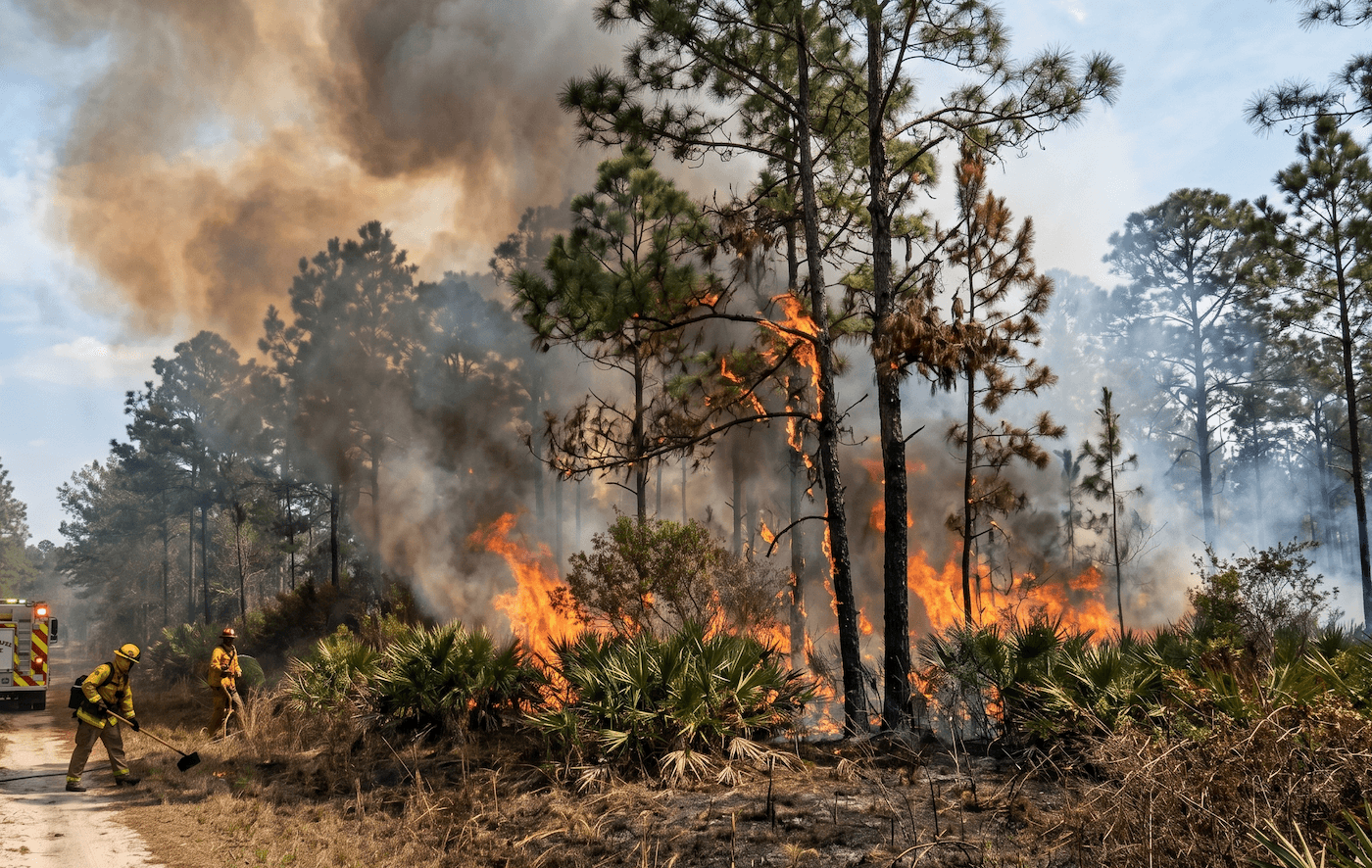
Header photo: Tommy Picone (Pexels)

Continue this story for free.
Stay informed about Pasco County. Enter your email to access the full story and receive local news and community updates.
Free to read · No password to remember
New here? We’ll email you a sign-in link and code. Already a reader? Use your usual email.
Read next
Deputies Seek Three Teens After New Port Richey Home Under Construction Is Vandalized
The Pasco Sheriff's Office is asking for the public's help identifying three juveniles who damaged a home being built in New Port Richey on June 4.
Read the story ↗
Stay connected with Pasco County
Follow us for the latest community news and updates
Comments
What does this mean for your neighborhood? Share your experience or ask a question.
Your draft stays here while you sign in. Be respectful and keep it local.
No comments yet. Be the first to share your thoughts!