DeSantis Vetoes E-Bike Speed Limits and Four Other Bills, Leaving Pasco's Rules in Local Hands
Gov. Ron DeSantis rejected five bills in late June, including a statewide e-bike safety measure — meaning Pasco County and its cities keep setting their own rules on the increasingly common bikes.
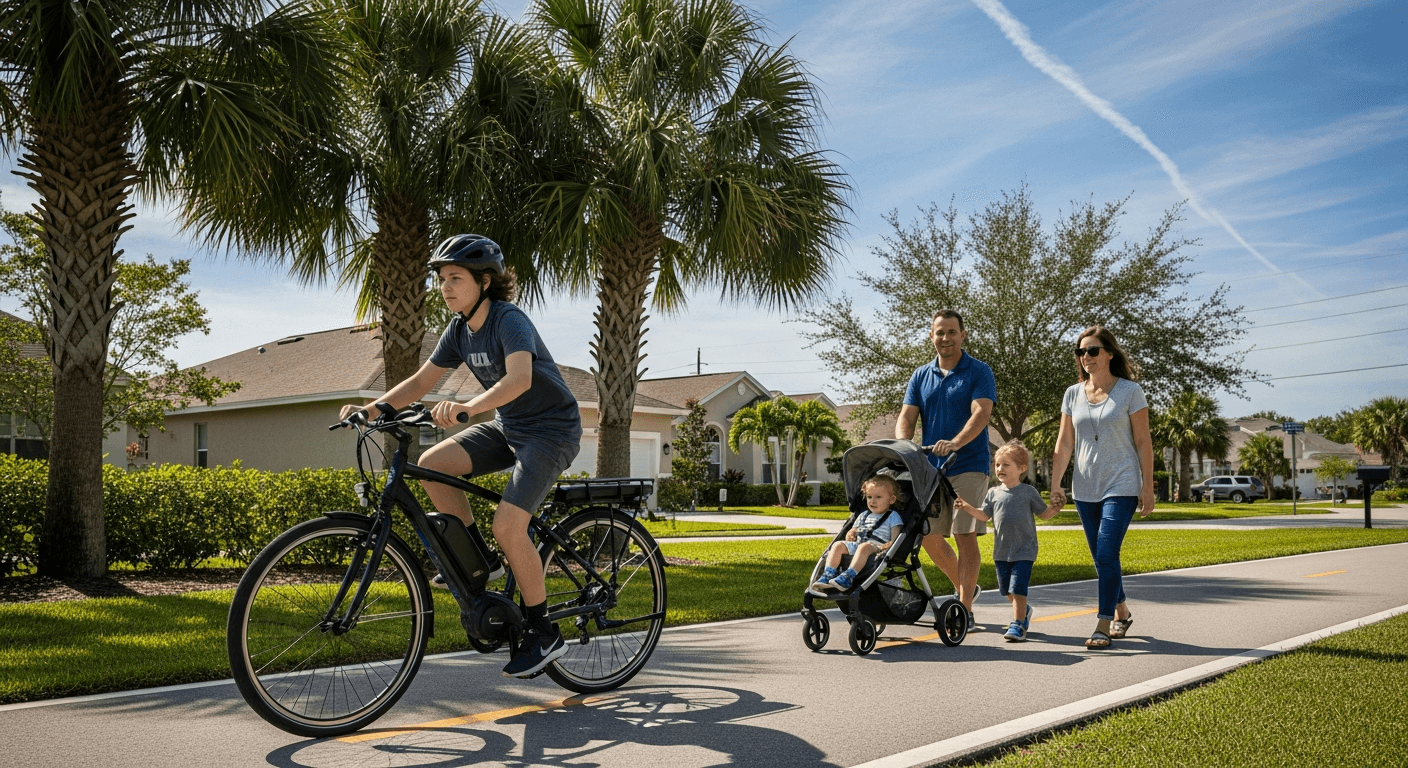
Gov. Ron DeSantis vetoed a statewide e-bike safety bill in late June, leaving Pasco County and its cities free to keep writing their own rules for the electric bicycles and scooters now crowding local trails, sidewalks and neighborhood streets. It was one of five bills the governor rejected — alongside measures on inmate truck-driver training, teen poll volunteers, naturopathic medicine and a sign exemption for a South Florida town — in a flurry of veto letters filed with the Secretary of State.
For families in Pasco, the e-bike veto is the one most likely to be felt close to home. The bill (SB 382) would have created the first uniform statewide standard for how fast e-bikes can travel near people on foot. With it dead, what's legal on a path in Wesley Chapel or Land O' Lakes still depends on whatever local ordinance — if any — is on the books.
What the e-bike bill would have done
SB 382 would have capped e-bike speeds at 10 mph when riding within 50 feet of a pedestrian and required riders on shared paths to yield and signal before passing, according to WKMG ClickOrlando. Violators would have faced a nonmoving traffic violation and fines topping $100. The bill also created a "Micromobility Device Safety Task Force" to recommend further regulations.
In his veto letter, DeSantis argued the 10-mph-within-50-feet standard would be nearly impossible for a rider to measure in real time, and that enforcing it would likely require speed-detection and surveillance devices — leading, in his words, to enhanced monitoring of residents by local governments. He also objected that the task force had no end date, yet the bill imposed substantive new rules before that task force could even meet.
What it means for Pasco riders and parents
Because there's no statewide framework, Florida's existing e-bike laws remain in place: no license, registration or insurance is required, helmets are mandatory for riders under 16, and only those 16 and older may operate the fastest Class 3 e-bikes. Beyond that baseline, individual cities and counties set their own terms — and those can vary sharply from one community to the next.
Other parts of the state offer a preview of how local-only enforcement plays out. In Flagler County, the Sheriff's Office told ClickOrlando it ramped up enforcement after seeing more crashes, missing helmets and riders failing to yield, and Palm Coast passed its own ordinance requiring riders to be at least 11, carry a photo ID and wear a helmet under 16. Pasco parents weighing whether to buy a child an e-bike should check their own city or county rules before assuming a single statewide standard applies.
Before letting a child ride an e-bike on local trails or sidewalks, confirm the rider meets the state age rules for the bike's class, make sure anyone under 16 wears a helmet, and check whether your city has added local restrictions.
The other four vetoes
The e-bike measure was part of a larger batch. Here's a quick look at what else the governor blocked, based on the official veto letters and reporting from Florida Politics.
| Bill | What it would have done | Governor's reason |
|---|---|---|
| HB 325 — Inmate CDL Training | Trained certain inmates for commercial driver's licenses, including driving state vehicles outside the fence under supervision | Called it burdensome to Corrections and a public-safety risk on public roads |
| HB 461 — Poll Volunteers | Let high school students volunteer at polls for community-service hours | Said it could bypass Florida's ban on single-party poll workers |
| SB 688 — Naturopathic Medicine | Created a state Board of Naturopathic Medicine with licensing and fees | Called it an unneeded bureaucratic hurdle that could hurt current practitioners |
| HB 4075 — Town of Davie | Exempted a parcel near I-75 from outdoor advertising laws | Warned it could reduce Florida's federal highway funding |
On the inmate truck-driver bill, DeSantis said the program was unnecessarily burdensome to the Department of Corrections and raised serious public-safety concerns by allowing incarcerated people to operate commercial vehicles on public roads. Notably, the bill had passed both chambers unanimously; supporters had pointed to a nationwide commercial-driver shortage, with a House analysis citing roughly 80,000 unfilled trucking jobs and an estimated 1.2 million drivers expected to retire, Florida Politics reported.
On naturopathic medicine, the governor argued that physicians, osteopaths, acupuncturists and dietitians can already use natural-remedy methods, and that the new licensing board would have forced existing practitioners to pay fees and complete post-graduate education not even available in Florida.
Note: The governor's office indicated more vetoes — specifically budget line items — were expected as he finalized the state budget ahead of the July 1 start of the new fiscal year.
The bottom line
For most Pasco residents, the practical takeaway is simple: the statewide e-bike rules that would have set one clear speed standard near pedestrians are not becoming law, so local ordinances — and local enforcement — remain the deciding factor. As e-bikes keep multiplying on Pasco's trails and streets, it's worth knowing exactly which rules apply where you ride.
For more on this and other state decisions affecting our area, visit Pasco County Community Website and follow us on Facebook, Instagram, and X. Have a take on the e-bike rules in your neighborhood? Join the conversation in our Community Forum, and read more government and politics and public safety stories from across Pasco County.
Continue this story for free.
Stay informed about Pasco County. Enter your email to access the full story and receive local news and community updates.
Free to read · No password to remember
New here? We’ll email you a sign-in link and code. Already a reader? Use your usual email.
Read next
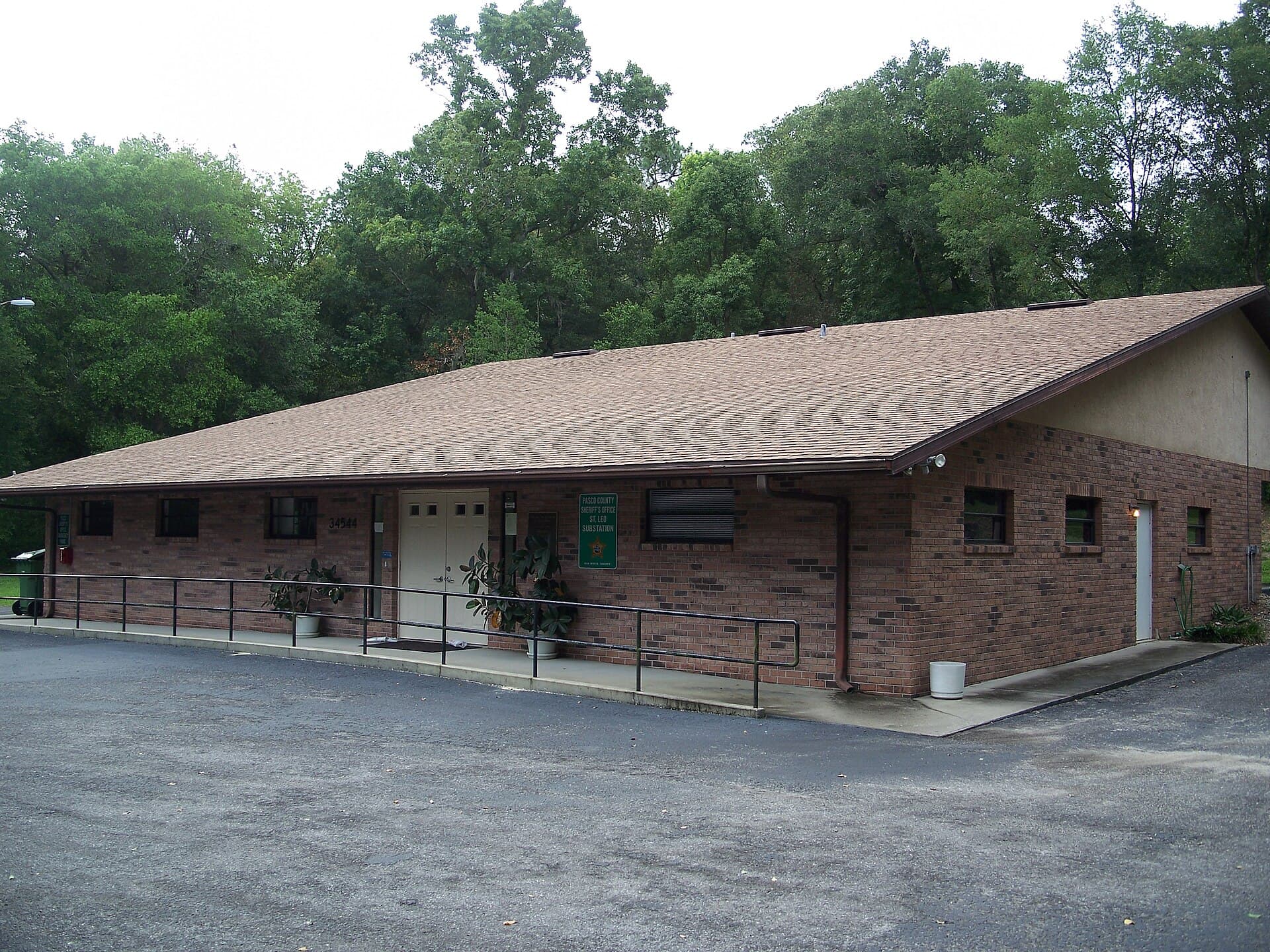
St. Leo Mayor Resigns Days After University Fires Him Over Unspecified "Allegation"
Vincent "Mike" D'Ambrosio stepped down as mayor of the roughly 3,000-resident town after Saint Leo University terminated him following an internal investigation. Commissioner Curtis Dwyer is now serving as interim mayor.
Read the story ↗
Stay connected with Pasco County
Follow us for the latest community news and updates
Comments
What does this mean for your neighborhood? Share your experience or ask a question.
Your draft stays here while you sign in. Be respectful and keep it local.
No comments yet. Be the first to share your thoughts!